
Universal Pipette Tips
Disposable pipette tips designed to fit single and multichannel pipettes from most manufacturers; offer acceptable performance compared to pipette specific tips and can be used with a variety of pipette models.
Single-use universal pipette tips are designed for compatibility with most mechanical and electronic single and multichannel pipettors.
Universal pipette tips are available in a range of types, sizes, colors, styles, and packaging configurations and may be designed for specific purposes or tasks.
- Capacity or volume based on the pipettor size
- Filters to reduce contamination and cross-contamination
- Color
- Sterility or autoclavability
- Tip style: beveled, tapered, wide bore, round, flat, or gel-loading
- Length: short or extended
- Purity: metal-free or DNase-, RNase-, ATP-, Bioburden-, PCR inhibitor-, endotoxin-, or pyrogen-free for genomic and biologic applications
- Surface treatments to reduce retention
- Packaging options to help facilitate re-stocking or eliminate waste

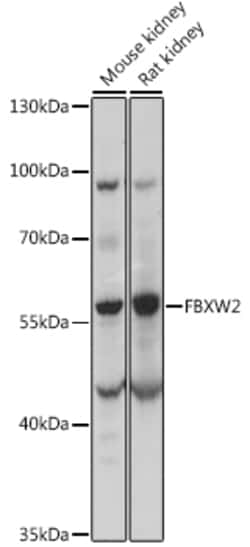
ABclonal Technology FBXW2 Rabbit pAb

F-box proteins are an expanding family of eukaryotic proteins characterized by an approximately 40 amino acid motif, the F box. Some F-box proteins have been shown to be critical for the ubiquitin-mediated degradation of cellular regulatory proteins. In fact, F-box proteins are one of the four subunits of ubiquitin protein ligases, called SCFs. SCF ligases bring ubiquitin conjugating enzymes to substrates that are specifically recruited by the different F-box proteins. Mammalian F-box proteins are classified into three groups based on the presence of either WD-40 repeats, leucine-rich repeats, or the presence or absence of other protein-protein interacting domains. This gene encodes the second identified member of the F-box gene family and contains multiple WD-40 repeats.


ABclonal Technology ADAM19 Rabbit pAb
This gene encodes a member of the ADAM (a disintegrin and metalloprotease domain) family. Members of this family are membrane-anchored proteins structurally related to snake venom disintegrins and have been implicated in a variety of biological processes involving cell-cell and cell-matrix interactions, including fertilization, muscle development, and neurogenesis. This member is a type I transmembrane protein and serves as a marker for dendritic cell differentiation. It has been demonstrated to be an active metalloproteinase, which may be involved in normal physiological processes such as cell migration, cell adhesion, cell-cell and cell-matrix interactions, and signal transduction. It is proposed to play a role in pathological processes, such as cancer, inflammatory diseases, renal diseases, and Alzheimers disease.

ABclonal Technology RNF185 Rabbit pAb
Enables ubiquitin binding activity, ubiquitin protein ligase activity, and ubiquitin-like protein conjugating enzyme binding activity. Involved in positive regulation of ERAD pathway, protein autoubiquitination, and ubiquitin-dependent ERAD pathway. Located in endoplasmic reticulum.

ABclonal Technology ACTR10 Rabbit pAb
Predicted to be involved in retrograde axonal transport of mitochondrion. Predicted to be located in cytosol, extracellular region, and secretory granule. Predicted to be part of dynactin complex.
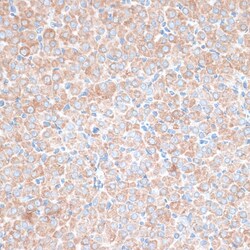
ABclonal Technology PMEPA1 Rabbit pAb
This gene encodes a transmembrane protein that contains a Smad interacting motif (SIM). Expression of this gene is induced by androgens and transforming growth factor beta, and the encoded protein suppresses the androgen receptor and transforming growth factor beta signaling pathways though interactions with Smad proteins. Overexpression of this gene may play a role in multiple types of cancer. Alternatively spliced transcript variants encoding multiple isoforms have been observed for this gene.
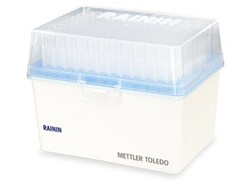
Rainin 3P Pipette Tips RT UNV 1000uL LS 768A/8
Racked tips, 1000 uL max. volume, universal-fit, low-retention, Sterilized, 768 tips in 8 racks of 96.
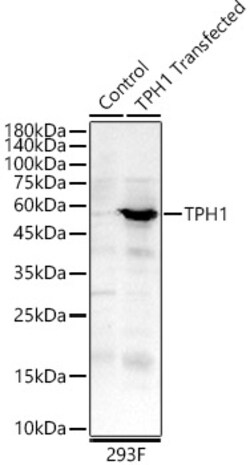
ABclonal Technology TPH1 Rabbit pAb
This gene encodes a member of the aromatic amino acid hydroxylase family. The encoded protein catalyzes the first and rate limiting step in the biosynthesis of serotonin, an important hormone and neurotransmitter. Mutations in this gene have been associated with an elevated risk for a variety of diseases and disorders, including schizophrenia, somatic anxiety, anger-related traits, bipolar disorder, suicidal behavior, addictions, and others.

Cole-Parmer TIP ART 100-1000UL STERILE 800
TIP ART 100-1000UL STERILE 800 PKADD NIST-TRACEABLE CALIBRATION ITEM# CQ-17104-00
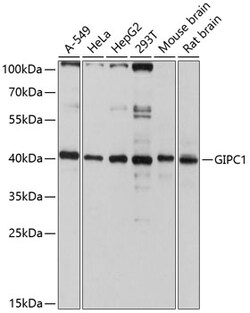
ABclonal Technology GIPC1 Rabbit pAb
GIPC1 is a scaffolding protein that regulates cell surface receptor expression and trafficking (Lee et al., 2008 [PubMed 18775991]).

ABclonal Technology Butyrylcholinesterase Rabbit pAb
This gene encodes a cholinesterase enzyme and member of the type-B carboxylesterase/lipase family of proteins. The encoded enzyme exhibits broad substrate specificity and is involved in the detoxification of poisons including organophosphate nerve agents and pesticides, and the metabolism of drugs including cocaine, heroin and aspirin. Humans homozygous for certain mutations in this gene exhibit prolonged apnea after administration of the muscle relaxant succinylcholine.

ABclonal Technology NDUFAF2 Rabbit pAb
NADHubiquinone oxidoreductase (complex I) catalyzes the transfer of electrons from NADH to ubiquinone (coenzyme Q) in the first step of the mitochondrial respiratory chain, resulting in the translocation of protons across the inner mitochondrial membrane. This gene encodes a complex I assembly factor. Mutations in this gene cause progressive encephalopathy resulting from mitochondrial complex I deficiency.

ABclonal Technology SRA1 Rabbit pAb
Both long non-coding and protein-coding RNAs are transcribed from this gene, and they represent alternatively spliced transcript variants. This gene was initially defined as a non-coding RNA, which is a coactivator for several nuclear receptors (NRs) and is associated with breast cancer. It has now been found that this gene is involved in the regulation of many NR and non-NR activities, including metabolism, adipogenesis and chromatin organization. The long non-coding RNA transcripts interact with a variety of proteins, including the protein encoded by this gene. The encoded protein acts as a transcriptional repressor by binding to the non-coding RNA.

ABclonal Technology CARD8 Rabbit pAb
The protein encoded by this gene belongs to the caspase recruitment domain (CARD)-containing family of proteins, which are involved in pathways leading to activation of caspases or nuclear factor kappa-B (NFKB). This protein may be a component of the inflammasome, a protein complex that plays a role in the activation of proinflammatory caspases. It is thought that this protein acts as an adaptor molecule that negatively regulates NFKB activation, CASP1-dependent IL1B secretion, and apoptosis. Polymorphisms in this gene may be associated with a susceptibility to rheumatoid arthritis. Alternatively spliced transcript variants have been described for this gene.

ABclonal Technology SPIRE2 Rabbit pAb
Predicted to enable actin binding activity. Involved in establishment of meiotic spindle localization, formin-nucleated actin cable assembly, and positive regulation of double-strand break repair. Predicted to be located in cytoskeleton, cytosol, and plasma membrane. Predicted to be active in cell cortex and cytoplasmic vesicle membrane. Predicted to colocalize with cleavage furrow.
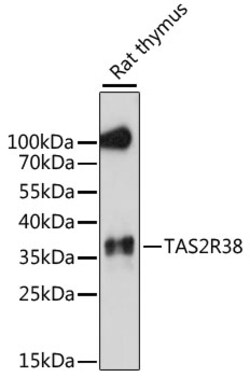
ABclonal Technology TAS2R38 Rabbit pAb
This gene encodes a seven-transmembrane G protein-coupled receptor that controls the ability to taste glucosinolates, a family of bitter-tasting compounds found in plants of the Brassica sp. Synthetic compounds phenylthiocarbamide (PTC) and 6-n-propylthiouracil (PROP) have been identified as ligands for this receptor and have been used to test the genetic diversity of this gene. Although several allelic forms of this gene have been identified worldwide, there are two predominant common forms (taster and non-taster) found outside of Africa. These alleles differ at three nucleotide positions resulting in amino acid changes in the protein (A49P, A262V, and V296I) with the amino acid combination PAV identifying the taster variant (and AVI identifying the non-taster variant).